In the vast, sprawling landscape of stories—from the epic novels gracing our shelves to the blockbuster films lighting up our screens—there’s an indispensable tool that helps us grasp their essence, understand their journey, and appreciate their genius: the Plot Summary & Detailed Synopsis. This isn't just about distilling a narrative; it's about mastering the art of concise storytelling, allowing you to unlock the heart of any tale, whether you're a student, a creative, or simply a passionate reader.
Think of it as the ultimate storyteller's cheat sheet, an elegant solution to understanding complex narratives without getting lost in the weeds. It’s the difference between hearing every single note in a symphony and understanding its soaring melody.
At a Glance: What You'll Discover
- What a Plot Summary Truly Is: More than just a recap—it's a focused distillation of a story's core.
- Why It Matters: How summaries empower understanding, analysis, and communication across various fields.
- Key Traits of a Great Summary: Learn the principles of brevity, neutrality, and versatility.
- Your Step-by-Step Guide: A practical framework for writing compelling plot summaries.
- Plot Summary vs. Detailed Synopsis: Understanding when to be brief and when to dive deeper.
- Real-World Examples: See effective summaries in action across different media.
- Common Questions Answered: Clarifying typical misconceptions.
What Exactly Is a Plot Summary? Beyond the Cliff's Notes
At its core, a plot summary is a meticulously crafted, concise presentation of the main events and overarching themes of a narrative. Whether it’s a novel, a movie, a stage play, or even a non-fiction account, its purpose remains the same: to capture the story’s beating heart. It takes the sprawling tapestry of a tale—with its intricate characters, mounting conflicts, and evolving settings—and condenses it into a digestible format.
This isn't about giving away spoilers (though that's often a side effect); it's about providing a roadmap. By highlighting the primary events, introducing the key players, and outlining their crucial interactions, a well-written plot summary enables you to grasp the fundamental essence of a story without wading through every single detail. For students, it’s a comprehension lifeline; for professionals, it's a strategic communication tool.
Consider it your narrative GPS. It tells you where the story starts, the major turns it takes, and where it ultimately ends, all without forcing you to drive every mile yourself.
Why Master the Art of Summarizing? The Power of Conciseness
The ability to distill a narrative into its most potent form is more than just an academic exercise; it's a critical skill with far-reaching applications. Mastering the art of the plot summary unlocks deeper understanding and provides invaluable tools for various scenarios.
In Educational Settings: Your Academic Ally
For students, the plot summary is an indispensable ally. It’s not merely a shortcut to avoid reading; rather, it’s a profound aid to genuine comprehension and critical analysis.
- Clarifying Complicated Tales: Ever felt lost in a dense novel or a multi-layered film? A summary cuts through the noise, breaking down the main events and character motivations into an accessible sequence. It clarifies the narrative arc, making complex plots understandable.
- Sharpening Analytical Skills: The act of summarizing itself is an exercise in critical thinking. It teaches you to identify what truly matters, to distinguish between primary plot points and secondary details, and to organize information logically. This skill translates directly to better essay writing and reasoned arguments.
- Enhancing Discussions and Presentations: Imagine walking into a classroom discussion having a solid, concise overview of the text. Plot summaries serve as quick reference tools, providing a shared foundation for meaningful dialogue about themes, character development, and literary devices. They help you remember and organize key points, especially during exams.
- Tracing Character Growth: By focusing on pivotal moments, a summary clearly illustrates how characters evolve, revealing their motivations and the impact of conflicts on their journey.
Beyond the Classroom: Fueling Industry and Creativity
The utility of a plot summary extends far beyond academic walls. In the professional world, it’s a cornerstone of communication and marketing.
- Publishing & Marketing: Pick up almost any book, and you’ll find a plot summary on the back cover or inside flap. These concise descriptions are vital for enticing readers, setting expectations, and communicating the book’s premise. They are the initial handshake between a story and its potential audience.
- Film & Television Industry: From pitching a new series idea to promotional content and trailer descriptions, plot summaries are the lifeblood of Hollywood. Filmmakers, writers, and producers use them to convey their vision, secure funding, and market their creations. They're essential for quickly communicating the core concept of a story, like what you might find in a quick overview of a film's narrative arc. For instance, if you were to watch Queen Never Cry full movie, a plot summary would give you a clear understanding of its central conflict and character journeys before you even press play.
- Business & Technical Writing: Even in non-narrative contexts, the ability to summarize complex information is invaluable. Executive summaries, project overviews, and technical abstracts all demand the same skill set: distilling vast amounts of data into actionable, understandable nuggets.
In essence, mastering the plot summary isn't just about understanding stories; it's about mastering communication itself—a skill crucial in every facet of life.
The Hallmarks of a Stellar Plot Summary
Not all summaries are created equal. A truly effective plot summary adheres to several key characteristics that ensure its usefulness, trustworthiness, and clarity. Think of these as the fundamental rules of engagement when you set out to encapsulate a story.
Brevity: The Art of Less is More
The defining characteristic of any good plot summary is its brevity. This isn't just about making it short; it's about making every single word count.
- Focus on the Core: A summary strips away extraneous details, minor subplots, and tangential character arcs. It zeros in on the necessary elements that drive the main narrative forward.
- Quick Reference & Review: Its conciseness makes it an ideal tool for quick reference, whether you're jogging your memory before an exam or recalling a story's premise for a discussion.
- Foundation for Deeper Study: While brief, it provides a solid foundation. Once you understand the basic plot, you can then delve into themes, symbolism, and character analysis with a clear map of the story's journey.
Why it matters: In an information-saturated world, the ability to quickly grasp the main points of a story is invaluable. Brevity ensures efficiency and prevents cognitive overload.
Neutrality: Just the Facts, Ma'am
A plot summary is not a review, nor is it a personal interpretation. It maintains an objective tone, presenting the story's facts as they unfold, without personal opinions or critical judgments.
- Avoid Personal Bias: Steer clear of phrases like "I thought this character was annoying" or "The ending was disappointing." Your job is to recount what happened, not how you felt about it.
- Present Facts as They Are: Describe events, character actions, and motivations directly from the narrative.
- No Interpretation: Save your analysis, interpretations, and opinions for a separate critical essay or discussion. The summary is purely descriptive.
Why it matters: Objectivity builds trust. Readers rely on a summary to provide an unbiased account of the story, allowing them to form their own opinions after engaging with the full narrative.
Versatility: A Tool for Every Tale
One of the most powerful aspects of a plot summary is its adaptability. It’s a universal tool applicable to virtually any narrative form.
- Novels & Short Stories: Condensing the intricate worlds created by authors.
- Films & Television Series: Capturing the visual storytelling of the screen.
- Plays & Musicals: Summarizing stage narratives.
- Non-Fiction Narratives: Even biographies, historical accounts, or case studies can benefit from a plot summary-like structure, outlining key events and developments.
Why it matters: This versatility makes the plot summary a foundational skill for anyone engaging with stories, regardless of the medium. It's a testament to the universal human need to understand narratives.
By adhering to these characteristics, you ensure your plot summaries are not just accurate, but genuinely useful, insightful, and reliable.
Your Blueprint: How to Craft a Plot Summary That Sings
Writing a great plot summary is a skill that improves with practice, but it's built on a clear, systematic approach. Here’s a three-phase blueprint to guide you from initial encounter to polished gem.
Phase 1: Pre-Flight Check (Reading & Note-Taking)
Before you can condense a story, you must first thoroughly understand it. This isn't a passive activity; it requires active engagement.
- Immerse Yourself: Read the book, watch the film, or experience the narrative in its entirety. Try to do so without preconceptions, allowing the story to unfold naturally.
- Take Detailed Notes: As you go, jot down crucial information. Don't worry about conciseness yet. Focus on capturing:
- Main Characters: Who are they? What are their key traits, goals, and conflicts?
- Main Events: What significant actions or occurrences drive the story forward?
- Key Themes: Are there recurring ideas, messages, or moral questions the story explores?
- Setting: Where and when does the story take place?
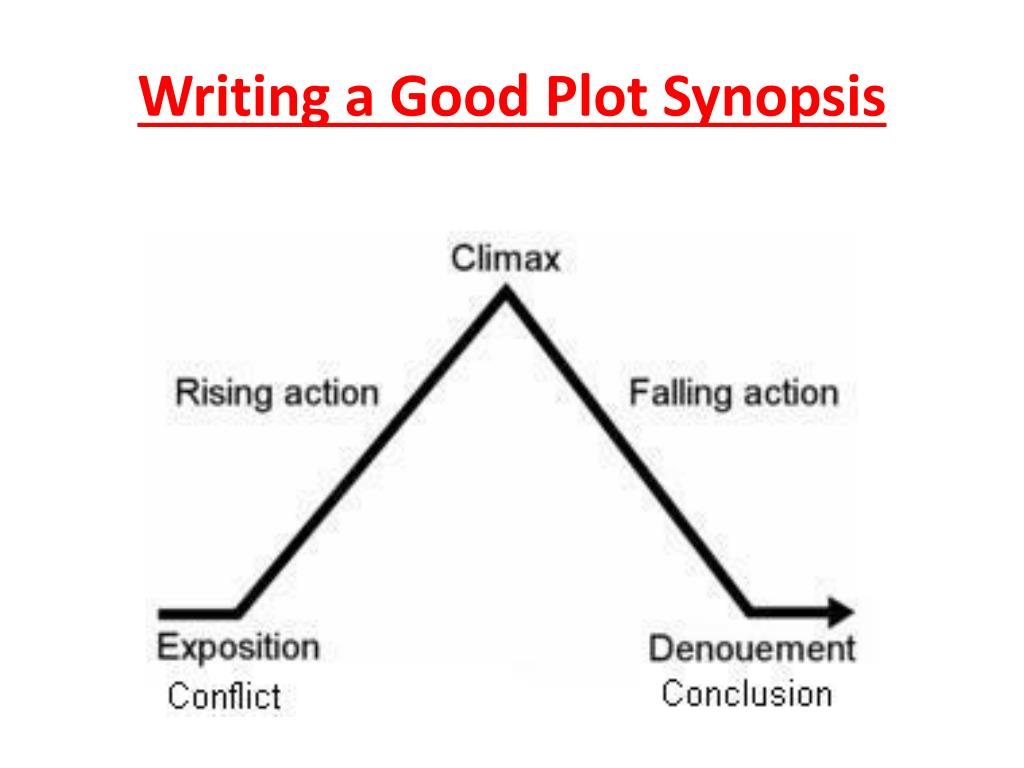
- Identify the Core Arc: Once you've finished, look back at your notes and pinpoint the absolute essential moments that define the beginning, middle, and end of the main plot.
- Beginning: How does the story set the scene, introduce the protagonist, and establish the initial conflict or inciting incident?
- Middle: What are the key rising actions, complications, and turning points that advance the plot and challenge the characters?
- End: How does the climax unfold, and what is the resolution of the main conflict?
Mini Example (from Harry Potter and the Sorcerer’s Stone): - Beginning: Harry, an orphaned boy living under the stairs, discovers on his eleventh birthday that he is a wizard and is invited to Hogwarts School of Witchcraft and Wizardry.
- Middle: Harry arrives at Hogwarts, befriends Ron and Hermione, learns about the magical world, and, along with his friends, uncovers a plot to steal the Sorcerer's Stone from a forbidden chamber.
- End: Harry confronts Professor Quirrell, who is secretly possessed by Lord Voldemort, and prevents him from stealing the Stone, thus saving the magical world and completing his first year.
Phase 2: The First Draft (Building the Narrative Core)
Now, it's time to translate your notes into a coherent, chronological narrative. Focus on getting the essential information down, knowing you'll refine it later.
- Craft a Compelling Introduction: Start with a sentence or two that sets the scene, introduces the main protagonist, and briefly states the initial premise or conflict.
- Example: "In J.K. Rowling’s enchanting novel, ‘Harry Potter and the Sorcerer’s Stone,’ young Harry Potter, an orphaned boy living with his neglectful relatives, discovers his true magical heritage on his eleventh birthday and begins his extraordinary journey at Hogwarts School of Witchcraft and Wizardry."
- Summarize Chronologically: Follow the story's timeline, focusing only on the key events you identified in Phase 1. Each event should logically lead to the next, advancing the main plot.
- Describe the challenges Harry faces, the clues he uncovers, and the allies he gathers.
- Detail the discovery of the plot to steal the Stone and the final confrontation.
- Conclude with the resolution—Harry’s victory and the subsequent events that wrap up the main conflict.
- Include Climax and Resolution: Ensure your summary clearly depicts the story's turning point (climax) and how the main conflict is resolved.
- Example: "The narrative culminates as Harry confronts Professor Quirrell, revealed to be possessed by the dark wizard Lord Voldemort, who seeks to steal the immortality-granting Sorcerer’s Stone. Harry bravely defeats Voldemort and secures the Stone, leading to the restoration of order at Hogwarts and the completion of his memorable first year."
Phase 3: Polishing Your Gem (Clarity, Conciseness, Objectivity)
The first draft gets the ideas down; the final draft makes them shine. This is where you apply the hallmarks of a great summary.
- Revise for Clarity and Conciseness: Read through your draft, eliminating any unnecessary words, redundant phrases, or overly detailed descriptions. Every sentence should serve a purpose.
- Ask: "Does this sentence advance the plot?" "Can I say this more simply?"
- Example Revision: Change "Harry, who is brave and kind, with a lightning-bolt scar, defeats the incredibly evil Lord Voldemort in a dramatic showdown" to "Harry defeats Lord Voldemort."
- Ensure Main Ideas Are Captured Accurately: Double-check that all critical plot points, character motivations, and thematic elements (if very central to the plot) are represented without distortion.
- Maintain Neutrality: Scrutinize your language for any subjective opinions, interpretations, or emotional biases. Remove them.
- Focus on the plot: Describe what happens, not why it's good or bad.
- Avoid character analysis: While you mention characters, don't delve into deep psychological analysis. Stick to their actions and direct motivations within the plot.
- Proofread for Engagement and Correctness:
- Grammar, Spelling, Punctuation: Essential for credibility.
- Flow and Transitions: Ensure the summary reads smoothly, with natural connections between sentences and paragraphs.
- Impact: Does it effectively convey the story's core? Does it leave the reader with a clear understanding?
By meticulously following these steps, you’ll produce a plot summary that is not only accurate and concise but also engaging and highly informative—a true testament to your understanding of the narrative.
Plot Summary vs. Detailed Synopsis: Knowing the Difference
While often used interchangeably, "Plot Summary" and "Detailed Synopsis" serve distinct purposes, differing mainly in their depth and length. Understanding this distinction is key to choosing the right tool for your audience and objective.
Plot Summary: The Snapshot
As we’ve discussed, a plot summary is typically short and to the point.
- Length: Usually a few sentences to a couple of paragraphs (think 50-300 words).
- Focus: It focuses exclusively on the main events, the protagonist’s central goal, the primary conflict, and the resolution of that conflict. Minor characters, subplots, and extensive descriptions are omitted.
- Purpose: To give a quick, essential overview; to jog memory; to provide a concise preview for marketing materials (e.g., a book flap or film description). It aims to answer "What generally happens?"
Example (Plot Summary of Dune):
"Frank Herbert's Dune tells the story of Paul Atreides, a young nobleman whose family is given control of the desert planet Arrakis, the sole source of the vital 'spice' drug. After his family is betrayed and massacred, Paul and his mother flee into the desert, where they unite with the native Fremen. Paul embraces his destiny as a prophesied leader, leading a rebellion against the galactic empire to reclaim Arrakis and avenge his family."
Detailed Synopsis: The Guided Tour
A detailed synopsis, sometimes just called a "synopsis" in industry contexts (especially for films or novels being pitched), is a more comprehensive and extensive account of the story.
- Length: Can range from one to several pages (300-2000+ words), depending on the complexity of the narrative and the specific requirements.
- Focus: While still concise relative to the full story, it includes more depth. It will cover:
- Main plot points in more detail.
- Key subplots and how they intertwine with the main narrative.
- Major character arcs, including motivations, conflicts, and transformations.
- Significant world-building elements or thematic explorations that are central to the story’s impact.
- It still maintains neutrality, recounting events without personal judgment.
- Purpose: To provide a comprehensive understanding for someone who needs more than a surface-level overview but doesn't have time for the full narrative. This is common for agents reviewing manuscripts, producers considering a script, or academics preparing for in-depth analysis. It aims to answer "What exactly happens, and why do the main characters do what they do?"
Example (Detailed Synopsis of Dune: Part One (2021) - expanded from provided ground truth):
"Denis Villeneuve's Dune: Part One (2021) adapts the first half of Frank Herbert's epic sci-fi novel, immersing viewers in the harsh, feudal future of humanity. The story centers on Paul Atreides, the gifted son of Duke Leto Atreides and Lady Jessica of the Bene Gesserit, as his noble House Atreides is ordered by the Padishah Emperor to take over stewardship of the desert planet Arrakis. Arrakis is the universe's only source of 'spice,' a mind-altering substance crucial for interstellar travel and extending life. This assignment, however, is a calculated trap orchestrated by the Emperor and the Atreides' long-standing enemies, the brutal House Harkonnen.
Upon their arrival on Arrakis, the Atreides family faces immediate hostility from the Harkonnens, who sabotage their operations and orchestrate a devastating surprise attack that wipes out most of House Atreides and results in Duke Leto's death. Paul and Jessica, possessing unique Bene Gesserit training, manage to escape into the treacherous Arrakis desert. There, they must navigate the planet's extreme environment, including colossal sandworms, and seek refuge with the native Fremen—a resilient, deep-desert people with a fierce independence and a complex prophecy involving a messianic figure. Paul, haunted by prophetic visions of a holy war he may lead, gradually earns the trust of the Fremen, particularly Chani and Stilgar. He begins to understand his unique abilities and the weight of his destiny, choosing to embrace the Fremen's way of life and prepare for the inevitable confrontation to reclaim his family's honor and the future of Arrakis."
Choosing between a plot summary and a detailed synopsis depends entirely on your goal and your audience. For a quick intro, choose the summary. For a more thorough understanding without reading the whole story, opt for the detailed synopsis.
Real-World Examples: Seeing Excellence in Action
Let's look at a couple of concrete examples to illustrate how these principles translate into effective summaries.
"On the Road" by Jack Kerouac (Plot Summary)
"Jack Kerouac's seminal beat generation novel, On the Road, chronicles the spontaneous, cross-country adventures of Sal Paradise and his charismatic, restless friend Dean Moriarty. Set in post-World War II America, their journey embodies a search for freedom, self-discovery, and authentic experience through jazz clubs, intellectual discussions, and a series of transient relationships across the changing landscapes of 1940s American culture. Their travels are marked by both exhilarating highs and profound disillusionment, ultimately culminating in a poignant realization about the elusive nature of their quest and the fleeting spirit of youthful aspirations."
Why it works: This summary efficiently introduces the main characters, their core objective (seeking freedom/experience), the setting (1940s America), and the overarching emotional arc (exhilaration to disillusionment), without detailing every stop or encounter.
"Dune: Part One" (2021) (Detailed Synopsis Example)
(See the detailed synopsis provided in the previous section for Dune: Part One.)
Why it works: This longer synopsis goes beyond just the main arc. It introduces the political intrigue, the specific factions (Atreides, Harkonnen, Emperor, Fremen), the significance of "spice," and the specific challenges Paul and Jessica face. It also hints at Paul's internal conflict with his visions and his eventual alliance, providing a richer context than a brief summary would, yet still maintaining conciseness relative to the multi-hour film.
These examples demonstrate how summaries, whether brief or detailed, effectively capture the narrative's core, leaving the reader with a clear and accurate understanding without needing to consume the entire work.
Your Burning Questions Answered: FAQ on Plot Summaries
Even with a clear guide, common questions about plot summaries often arise. Let's tackle them head-on to solidify your understanding.
Can a plot summary help understand a confusing text?
Absolutely, yes. One of the primary benefits of a plot summary is its ability to clarify a complex or confusing narrative. By breaking down the main events, identifying key characters, and outlining their motivations in a straightforward, chronological manner, a summary untangles the narrative arc. It allows you to see the forest for the trees, making it easier to grasp central themes, character development, and the overall progression of the story without getting lost in intricate details or subplots. It provides a solid framework upon which you can build a deeper understanding.
How long should a plot summary be?
The length of a plot summary is highly contextual and depends on its purpose and the length/complexity of the original work.
- Generally concise: For most purposes, a plot summary is quite short, ranging from a few sentences to a couple of paragraphs (e.g., 50-300 words). This is typical for book jacket descriptions or quick overviews.
- For longer works or specific needs: For more in-depth academic study or industry pitches (what might be called a "detailed synopsis"), it might extend to a page or two.
- The key principle: Regardless of length, the goal is always to include only the most important events, characters, and their interactions necessary to convey the core essence of the story. If it can be shorter without losing essential meaning, make it shorter.
Should a plot summary include analysis?
No, a traditional plot summary should not include analysis. Its purpose is to provide a straightforward, objective overview of the story's events and characters as they unfold. Analysis, by definition, involves interpretation, critical evaluation, and personal opinion (e.g., "The author uses symbolism here to convey...") which is outside the scope of a summary. Save your interpretations, critical judgments, and thematic deep dives for separate essays, reviews, or discussions where such analysis is the explicit goal.
Are there different types of plot summaries?
Yes, the term "plot summary" can encompass several variations depending on the level of detail and specific focus required:
- Brief Summaries (or Loglines): These are extremely concise, often just one or two sentences, offering a quick snapshot of the story's core conflict and protagonist. Think of movie taglines.
- Standard Plot Summaries: The type we've focused on—a few paragraphs capturing the main events, characters, and resolution.
- Detailed Synopses: As discussed, these are more comprehensive, including major subplots, more nuanced character arcs, and significant supporting characters. They provide a more thorough overview than a standard summary.
- Chapter Summaries: For longer books, these break down the plot chapter by chapter, providing a concise recap of the events within each segment.
- Thematic Summaries: Less common as a standalone "plot summary," but sometimes summaries might subtly emphasize the main themes that drive the narrative events, rather than just the sequence of actions. This still avoids explicit analysis but highlights the thematic backbone.
The type of summary you choose depends entirely on your purpose and audience.
Elevating Your Storytelling Acumen
Mastering the plot summary and understanding when a detailed synopsis is appropriate isn't just about regurgitating facts; it’s about cultivating a profound appreciation for storytelling itself. It hones your critical eye, sharpens your communication skills, and empowers you to navigate the vast oceans of narrative with confidence and clarity.
Whether you're deciphering an ancient myth, evaluating a modern screenplay, or simply trying to remember the nuanced arc of your favorite novel, the ability to succinctly capture a story's essence is an invaluable skill. Practice identifying those pivotal moments, distilling them to their purest form, and presenting them with objective precision. As you do, you'll not only become a better summarizer but a more discerning reader, a more articulate communicator, and ultimately, a more insightful observer of the human condition as reflected in every tale ever told.